head TYPES
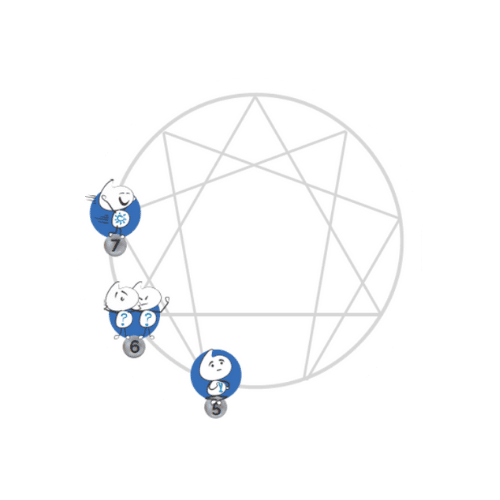
TYPE 5
The 5 is a mental strategist that tends to live in the isolated sanctuary of intense thinking while trying to understand things thoroughly. Space and isolation give them an opportunity to observe and feel more secure.
Strengths: Scholarly, perceptive, self-reliant.
Challenges: Isolated, overly intellectual, stingy.
Speaking style: Relational and content-orientated, most comfortable in their area of expertise. Not big on “small talk”.
Low potential: Hoarding, which means holding on to information or other resources based on the fear of shortages, either in oneself or the environment.
High potential: Non-attachment, which is letting go in order to be available for renewal.
Archetypal challenge: Participating in life with feelings, and integrating the inner and outer worlds.
TYPE 6
The 6 thinks about and questions almost everything. They love to be useful, diligent, service orientated, and hardworking. They seek security, fairness, and transparency.
Strengths: Loyal, courageous, attentive to people and problems, and often strategic thinkers.
Challenges: Suspicious, pessimistic, doubtful.
Speaking style: Setting limits on themselves and others, having serious questions, and playing devil’s advocate. By contrast, sometimes they are ideologically enthusiastic.
Low potential: Suspicion or distrust, which can lead to either fearfulness and holding back or an aggressive and pushy attitude.
High potential: Courage, which is not bravado but rather means feeling the fear and moving forward anyway.
Archetypal challenge: To sustain faith in other people and the life force, and to overcome the mind/body split.
TYPE 7
The 7 is energetic, vibrant, youthful, and adventurous. They tend to be social, busy, and positive. They enjoy variety, freedom, independence, and fun.
Strengths: Adventurous, fun-loving, quick-thinking.
Challenges: Self-absorbed, scattered, uncommitted.
Speaking style: Personal storytelling, which can be either highly entertaining or simply self-absorbed. They also focus on the positive and tend to ignore or quickly reframe the negative.
Low potential: Gluttony, which is not just about food, but rather a kind of intoxication or overconsumption of ideas, fun experiences, or substances.
High potential: Sobriety, which means both limiting consumption and calming the mind to be present in the moment.
Archetypal challenge: To make idealism practical, integrating optimism and positive thinking with the shadow side or problems.
TYPE cp 6
The counterphobic 6 (CP 6) has the same core motivations as 6, but has made a psychological movement against their own fear.
Strengths: Loyal, powerful, courageous, attentive to people and problems, and often strategic thinkers.
Challenges: suspicious, angry, dominating.
Speaking style: They have serious questions, and play devil’s advocate. They tend to be bossy and often get angry when something goes wrong. They are not afraid of calling out authority.
Low potential: Suspicion or distrust, which can lead to either holding back or an aggressive and pushy attitude.
High potential: Courage, which is not bravado but rather means feeling the fear and moving forward anyway.
Archetypal challenge: To sustain faith in other people and the life force, and to overcome the mind/body split.
designed by MinaMooi
2022